


-
- News Center
- Related News
-
- Hot Sale Aluminium Sheet 8x4
- 2015 Haomei Annual Meeting of the New Year
- Due to its unique dim
-
- Home > News > Industry news >
- High Cost Effective Mill Finish Aluminum Sheet
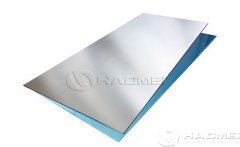
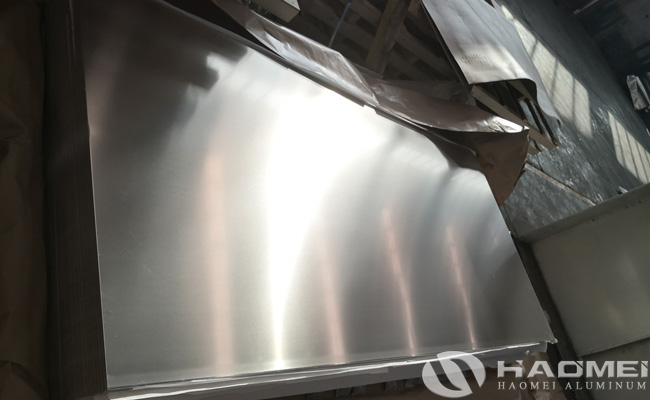
As one of the most widely used basic aluminum materials in the industrial field, mill finish aluminum sheets have become the core substrate choice for many manufacturing industries due to their natural surface finish, stable material properties, and high cost effectiveness.
Alloy selection is the core prerequisite for determining the application scenarios of mill finish aluminum sheets. Currently, the mainstream aluminum alloy systems supplied are mainly 1xxx, 3xxx, 5xxx and 6xxx series. Among them, the 1050 and 1060 pure aluminum sheets have an aluminum content of ≥99.5%, which has excellent electrical and thermal conductivity. Their room temperature tensile strength can reach 75-95MPa, and the elongation δ5 ≥25%, making them suitable for electronic component substrates and decorative structural parts with high conductivity requirements. The 3003 aluminum-manganese alloy sheet, due to the addition of 1.0-1.5% manganese, has a corrosion resistance that is more than 30% higher than that of pure aluminum, and the tensile strength is increased to 110-140MPa, making it the preferred substrate for HVAC and automotive heat dissipation systems. The 5052 aluminum-magnesium alloy sheet is strengthened by 2.2-2.8% magnesium, and the tensile strength can reach 190-240MPa. It has outstanding resistance to marine climate corrosion and is mostly used in ship parts and outdoor structural parts. Our mill finish aluminium sheets tempers cover O (annealed), H14 (semi-hard), and H18 (fully hard), and can be precisely matched to meet customer forming and processing requirements. O temper mill finish aluminum sheet products have an elongation rate of up to 35%, suitable for complex bending, while H18 temper mill finish aluminum sheet products have a hardness of HV55-65, meeting the strength requirements of stamped parts.
Thickness tolerance control is one of the core technical indicators of mill finish aluminum sheets. Haomei Aluminum has introduced German SMS cold rolling mills to achieve precise production within a thickness range of 0.2mm-10.0mm. Thickness tolerances can be controlled within ±0.02mm (thickness ≤1.0mm) and ±0.05mm (thickness 1.0-3.0mm), far exceeding the requirements of standard. In terms of surface quality, the original surface of mill finish undergoes online degreasing and cleaning processes, resulting in a surface roughness Ra≤0.8μm. It is free of defects such as oxide film delamination and scratches, directly meeting the requirements for subsequent secondary processing such as spraying and coating, eliminating the need for additional grinding and effectively reducing customer processing costs.
Refined control of the production process ensures stable product performance. Raw materials of mill finish aluminum sheet are sourced from high-quality cast-rolled coils from leading aluminum plants, undergoing homogenization annealing (480℃×6h) to eliminate internal structural stress. The cold rolling process employs multi-pass progressive rolling combined with online tension control technology to ensure sheet flatness ≤3mm/m. Finished products undergo precision straightening and online edge trimming, achieving dimensional accuracy of ±0.5mm/m. Compared to surface-treated aluminum sheets, mill finish aluminum sheets eliminate the need for anodizing and spraying processes, shortening the production cycle by more than 50%, reducing procurement costs by 20-30%, and reducing the use of chemical agents, thus aligning more closely with green manufacturing principles.
Based on the above characteristics, mill finish aluminum sheets have applications covering multiple fields such as construction, transportation, electronics, and packaging. In the construction industry, they are used as curtain wall backing panels and ceiling substrates. In the transportation sector, they are used as automotive interior panels and materials for rail transit ventilation ducts. In the electronics industry, they are used for lithium battery casings and transformer heat sinks. In the packaging sector, they are widely used in beverage cans and food packaging foil substrates.
With stable supply capabilities (annual capacity of 120,000 tons), precise technical matching, and a highly competitive pricing system, our mill finish aluminum sheet products have been exported to more than 20 countries and regions in the EU, Southeast Asia, and South America. They have passed third-party testing and certification by SGS, BV, and other organizations, fully complying with international standards such as ASTM B209 and EN 485. We can provide global customers with full-process technical support from product selection to customized production.-
- pre:pre:T6 Aluminum Sheet
- Next:next:Hot Sale Aluminium Sheet 8x4
- Haomei aluminum
- haomei Aluminium Plate