


-
- News Center
- Related News
-
- Standards for Aluminum Circles | ASTM B209, EN 851, EN 941
As essential blanks for stamping and spinning processes, aluminum circles are subject to established international standard systems that govern quality control, acceptance criteria, and compliance in cross-border trade. The global aluminum circle industry primarily follows two major frameworks: the American ASTM system and the European EN system. Each standard corresponds to specific application scenarios and technical requirements, serving as a critical reference for defining quality parameters and minimizing risks during the procurement and acceptance process.
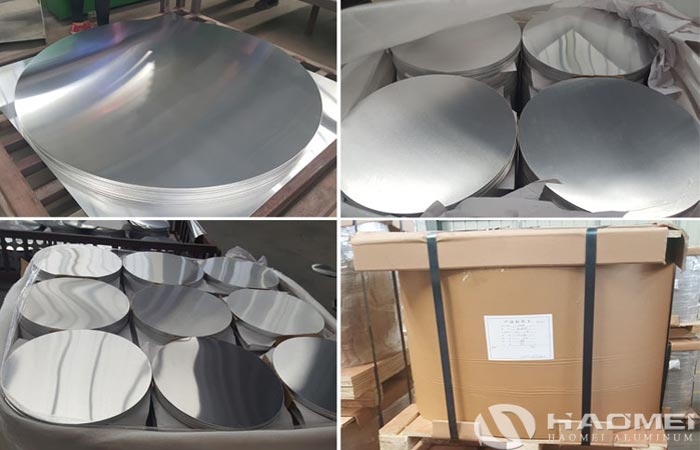
The American standard ASTM B209/B209M, "Standard Specification for Aluminum and Aluminum-Alloy Sheet and Plate," is the most widely used general standard for aluminum substrates globally and serves as the primary benchmark for the production of aluminum circles. This standard encompasses a full range of wrought aluminum alloy grades - including the 1xxx, 3xxx, and 5xxx series - and specifies limits for chemical composition, mechanical properties (based on temper), surface quality requirements, and sampling/inspection protocols. For instance, for commonly used grades such as 1050-O and 3003-O, the standard mandates an aluminum content of ≥99.50% for the 1050 alloy, while requiring a manganese content of 1.0%–1.5% for the 3003 alloy. It also provides precise, quantitative requirements for tensile strength, yield strength, and elongation at break for the "O" (annealed) temper. The base material properties, dimensional tolerances, and surface quality of finished aluminum discs can be evaluated according to these standards, which meet the procurement and acceptance requirements for the vast majority of industrial applications worldwide. In my over a decade of industry experience, I have observed that ASTM standards - valued for their clear provisions and consistent, stable updates - are the most frequently specified requirements by clients in export markets such as South America, the Middle East, and Southeast Asia.
The European EN system includes specific product standards for aluminum discs, categorized into two branches based on application, with provisions tailored to the practical requirements of each specific use case.
EN 851:2022, "Aluminium and aluminium alloys - Circular blanks and circles for the manufacture of cooking utensils," is a specialized European standard for the cookware sector. It applies to hot-rolled or cold-rolled aluminum discs and blanks with thicknesses ranging from 0.2 mm to 12 mm and diameters from 100 mm to 1,600 mm. In addition to specifying chemical composition and mechanical properties, this standard defines limits for surface defects and requirements for dimensional and geometric tolerances specific to cookware. It also references EN 602 - which governs the chemical composition of aluminum alloys intended for food contact - thereby ensuring compliance with EU regulations for materials in contact with food. It serves as the primary standard for aluminum discs exported to the EU cookware market.
EN 941:2022, "Aluminium and aluminium alloys - Circular blanks and circles for general applications," is designed for general industrial use and covers a broader scope. For discs produced via blanking (stamping), it applies to thicknesses of 0.2 mm–12 mm and diameters up to 1,000 mm; for larger discs produced via sawing or shearing, it covers thicknesses of 0.2 mm–200 mm and diameters up to 3,500 mm. This standard outlines technical delivery conditions, dimensional tolerances, and inspection rules for general industrial aluminum discs. It does not apply to blanks intended for cookware or impact extrusion; rather, it serves as a common reference standard for applications such as traffic signs, hardware components, and lighting reflectors.
As a professional manufacturer of aluminum circle discs, Haomei Aluminum produces its entire product range in strict accordance with ASTM B209, EN 851, and EN 941 standards. Every batch undergoes rigorous inspection against these standards prior to shipment and is accompanied by comprehensive documentation—including material composition reports, mechanical property test results, and compliance certificates—ensuring seamless customs clearance and acceptance in your target market. We offer customized production based on your specific standards, tolerances, and requirements, supported by end-to-end export services. Please feel free to contact our sales team to obtain technical specifications, sample test reports, or price quotes.-
- pre:pre:Half Hard Temper Aluminum Sheets
- Next:next:none
- Haomei aluminum
- haomei Aluminium Plate