-
-
- Hard Aluminum Sheets
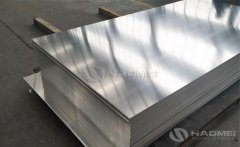
- Hard aluminum sheets represent the highest stiffness and strongest deformation resistance among all aluminum sheet states. Their core strength lies in significantly enhancing material hardness and yield strength through cold rolling work hardening or heat treatment strengthening mechanisms, making them specifically suited for industrial applications requiring "low forming difficulty and high structural rigidity." Haomei Aluminum's hard aluminum sheets are not simply "rolled hard materials." Instead, through precise control of deformation rate and heat treatment processes, we achieve standardized management of hardness, sheet shape, and residual stress. This addresses the pain points of ordinary soft and semi-hard aluminium sheets, such as easy denting, easy springback, and insufficient dimensional accuracy. They are functional materials that are often underestimated in industrial manufacturing.
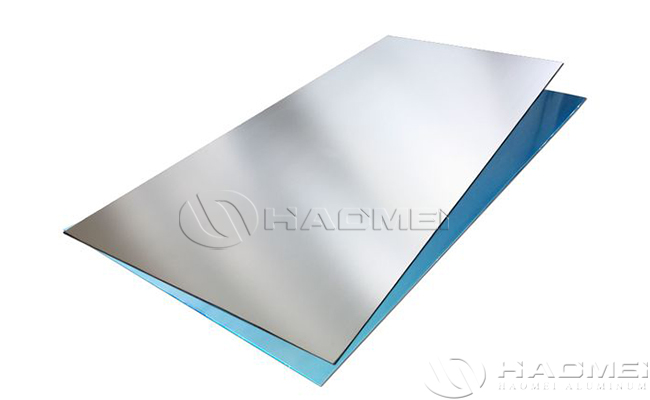
From a technological perspective, the performance differences in hard temper aluminum sheets stem from different hardening paths. The industry mainstream categorizes them into two standard tempers: H18 and H28. H18 is a fully work-hardened, fully hardened state. After cold rolling to the target thickness, no annealing is performed, retaining all the cold-rolling hardening effects. It has the highest hardness but relatively low plasticity. H28 is a stabilized hardened state. After cold rolling hardening, it undergoes low-temperature short-time annealing. While retaining over 90% of its strength, it eliminates some residual internal stress, improving dimensional stability and resistance to stress corrosion. Its forming performance is slightly better than H18, making it a more commonly used hardened specification in industrial mass production. Haomei hard aluminum sheets utilize a constant-pressure cold rolling process throughout, controlling the hardness deviation within ±5HB for the same coil to avoid stamping yield fluctuations caused by uneven hardness.
Precise performance parameters are the core basis for selecting hard aluminum sheets, and the hardened performance gradients of different alloy systems are clear.
3003-H18 rust-resistant hard aluminum sheet boasts a tensile strength ≥180MPa, Brinell hardness ≥65HB, and elongation after fracture ≥3%, balancing rust resistance and rigidity, making it a mainstream choice in civil hardware and construction.
5052-H28 medium-strength hard aluminum sheet exhibits a tensile strength ≥280MPa, Brinell hardness ≥90HB, and elongation after fracture ≥4%, with strength approaching that of ordinary low-carbon steel while retaining the salt spray corrosion resistance of aluminum-magnesium alloys.
1060-H18 pure hard aluminum sheet offers excellent electrical and thermal conductivity, with a hardness ≥45HB, making it ideal for electronic heat dissipation and power conduction applications.
All the hard aluminium sheet products strictly adhere to ASTM B209 standards for dimensional accuracy, with a thickness tolerance of ≤±0.03mm for the 0.5~2.0mm range, and a flatness of ≤1I, free from obvious waviness and warping.
The application of hard aluminum sheets consistently revolves around three core values: high rigidity, dent resistance, and shape retention, with clearly defined application scenarios.
In the electronics and electrical appliance industry, it is widely used for equipment housings, back panels, and heat dissipation base plates. The rigid material effectively resists external pressure deformation, ensuring assembly accuracy.
In the building decoration industry, it is used for aluminum ceiling panels, ceiling substrates, and curtain wall linings, offering high flatness after installation and resisting collapse and deformation over long-term use.
In the hardware manufacturing industry, it is suitable for shallow-drawn and simple-bending parts, such as hardware gaskets, signs, and spring-loaded structural components, exhibiting low springback and good dimensional consistency after forming.
In the transportation industry, it is used for vehicle body panels and interior load-bearing panels, offering superior impact and dent resistance compared to semi hard aluminum sheets.
Furthermore, heat-treated hard aluminum sheets such as 6061-T6 and 7075-T6 are widely used in high-load-bearing structural components and mold applications.
It is important to clarify that for hard aluminum sheets, higher hardness does not necessarily mean better suitability. Their plasticity is far lower than that of soft and semi hard aluminum sheets, supporting only shallow drawing and simple bending with low deformation. Forced deep drawing easily leads to cracking and excessive springback. Haomei Aluminum provides selection advice based on customers' processing techniques and operating conditions during the supply chain to avoid performance mismatches. Our hard aluminum sheets cover the entire 1000 series, 3000 series and 5000 series aluminum alloy systems, with thicknesses ranging from 0.2mm to 6.0mm. We support customized processing such as slitting, fixed-length leveling, and film coating, and come with complete export quality inspection documents. We can provide global customers with a stable and reliable one-stop supply solution for high-rigidity aluminum materials.
Return list
-
- COPYRIGHT (C)2020 Haomei Aluminum. All Rights Reserved.
-